
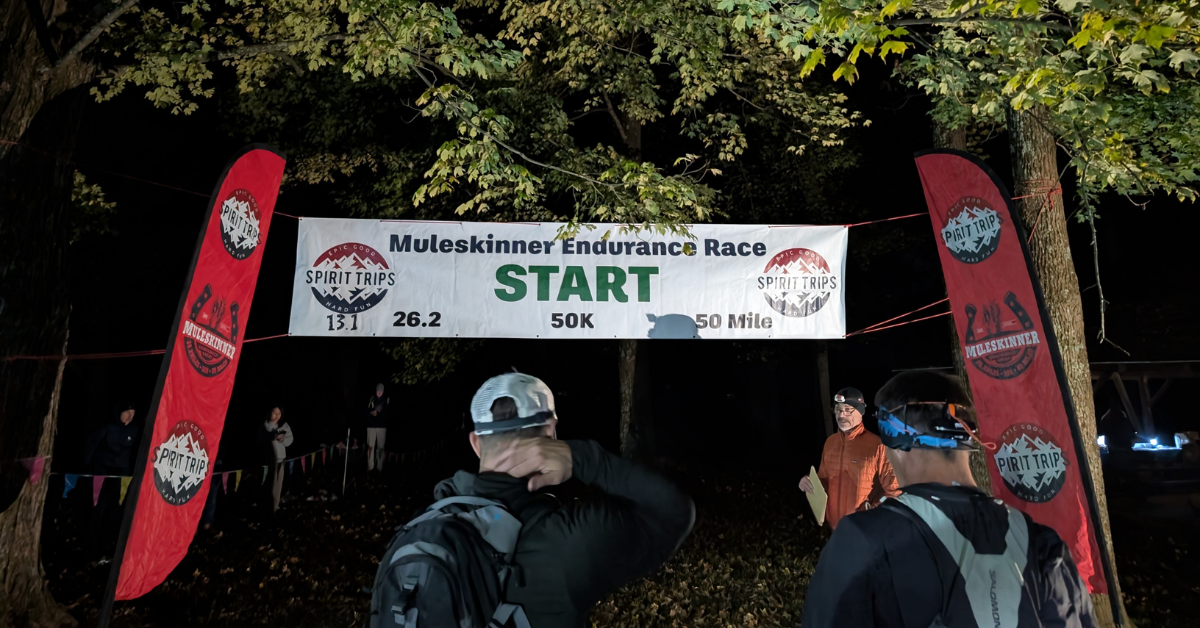
This post has basically nothing to do with technology. If you’re looking for that stuff, check out the rest of (looks around) this whole site. I thought of this post while out trail running this weekend, and I didn’t have anywhere else to put it. I’m not going to start a totally separate website to post one page of stuff. Who knows? If this becomes a more regular thing, maybe I will. For now, it’s going to live here.
I started trail running for real about five years ago. Prior to taking on trail running, I had been road running since 2008-ish. In that time, I finished my fair share of half-marathons and full marathons, as well as a half Iron Man in 2015. What’s I’m trying to say is that I already had a solid aerobic base to work off of. But I was becoming increasingly bored with the same old running routes, especially the long weekend runs, and I was ready to try something new. Trail running was that new thing.
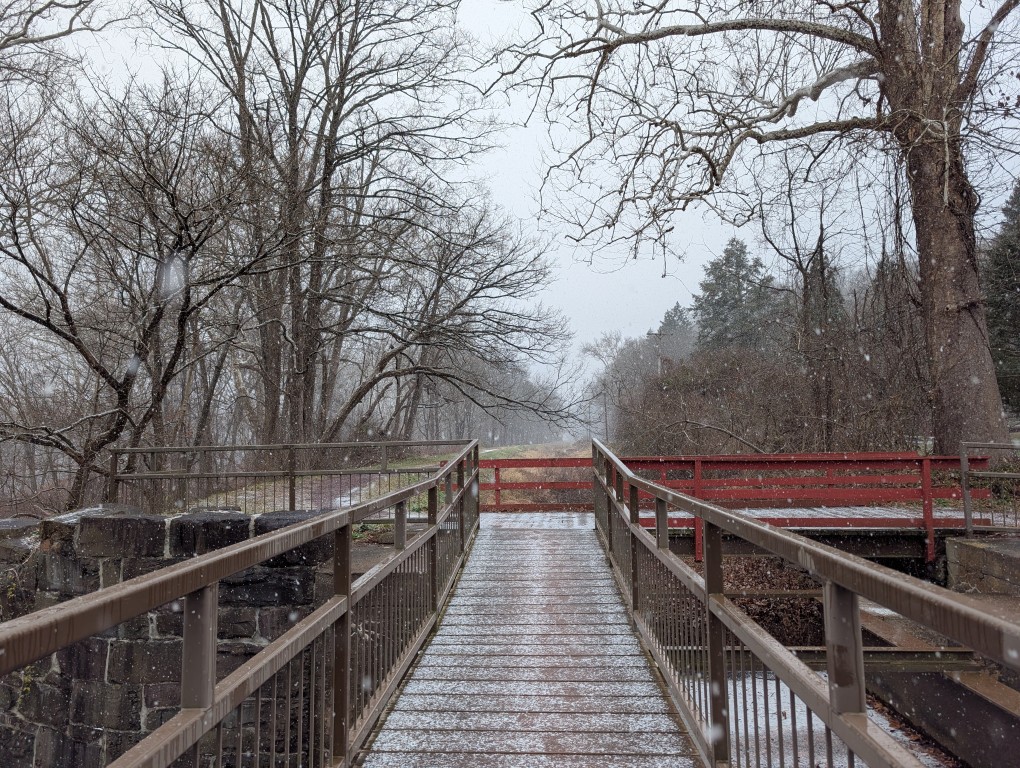
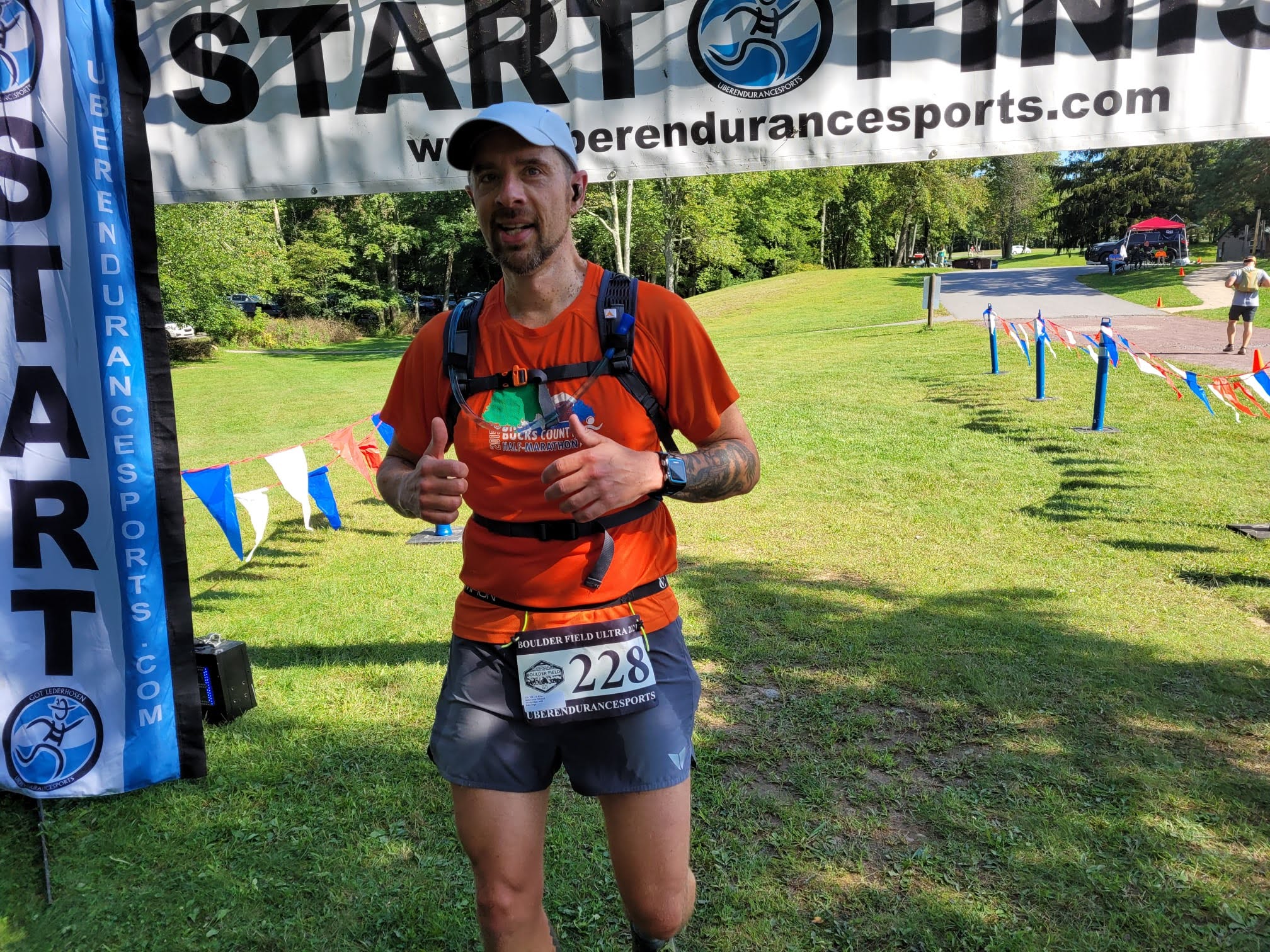
Since I started trail running, I have a renewed enjoyment of running in general. I’ve finished several 50ks and last year I ran 1,773 miles. That is by far a personal best for me. After spending countless hours enjoying the trail, I’ve learned a bit of what to do and what not to do, and I thought I would share it here. If you’re considering picking up trail running, I hope that this list helps you a bit. Trails are rough enough already, let’s see if I can smooth out your transition from road running a bit.
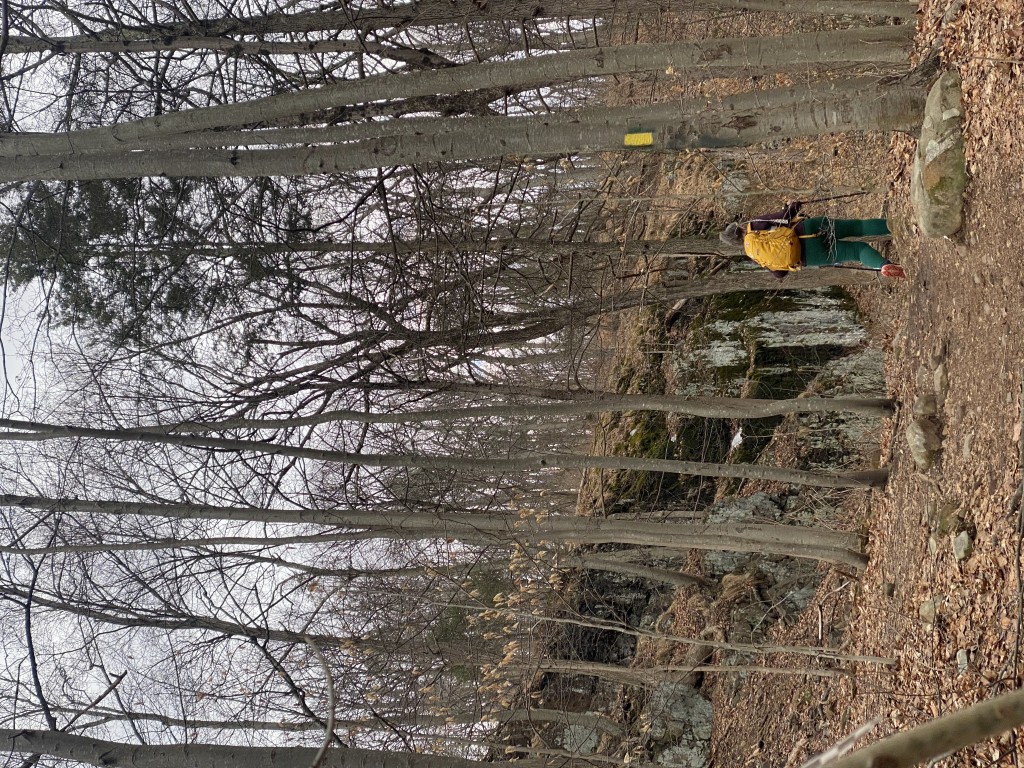
This advice is good for all trail running, but my primary focus is on more technical trails. What does technical mean? It simply means that the trail is more challenging due to its ruggedness. On a more technical trail, you can expect to find lots of obstacles and uneven terrain. There may be steep climbs, boulder fields, or creek crossings. The more technical a trail is, the less it resembles a nice asphalt ribbon winding through the woods and the more it resembles this.
I don’t want this advice to scare you off from trail running. Far from it! The trail is for everyone: walkers, runners, hikers, bikers, bipeds, quadrapeds, hell even octopods if they can manage it. In our over-digitalized age, there’s nothing so lovely as spending some time in nature. I’m not a spiritual person, but if I were, the trails would be my church.
This laundry list of advice is intended to help you have the best time possible on the trail without a bunch of unexpected surprises. The most important piece of advice is to get out there and enjoy yourself. It doesn’t matter if you only hike a single mile or run a 50k, just go do it. You’ll thank yourself later!
My first piece of advice is to slow down. Like waaaay down. Honestly, trails aren’t going to give you much of a choice, but I want you to understand how much slower you’ll be when you first start trail running. Back in 2021, my average road pace was around an 8 minute mile. My first trail run that year? My pace was 11 minutes per mile over 7.5 miles.
Let that sink in. My running pace dropped by 38%. It’s not like I wasn’t working hard. My average heart-rate on that run was 151 bpm. For comparison, the weekend prior I ran 12 miles at an 8:15/mile pace and my heart-rate was 147 bpm.
The simple truth is that trails make you work harder. The terrain is uneven, soft, and sometimes slippery. Each step will require more energy to push off. There are going to be roots, rocks, creeks, and other obstacles you have to navigate. The path can be full of twists and turns that your GPS doesn’t quite catch, creating a discrepancy between how far you actually ran versus what was recorded.
When you’ve finished your first trail run and your pace seems abysmally slow, I don’t want you to be disheartened. That’s 100% normal, and it will get better as you learn to navigate the more challenging terrain. Speaking of which…
When you’re running on smooth, even asphalt, you can get away with a shuffling run. Your feet barely have to rise above the height of the road. Try that on a trail and you will be eating dirt shortly. Most trails are uneven, with rocks and roots sticking up out of the ground. If you don’t pick up your feet, your toes are going to catch those protrusions and at best you’ll stumble. More likely, you are going to get up close and personal with the ground.
There’s lot of advice out there around improving your running form. The best and easiest piece I’ve found for trail running is to simply pick you feet up. Make sure you are kicking off and your foot is snapping back, almost like you’re trying to kick your own ass. Maybe not that extreme, but not far from it.
During especially long runs, this little gem has proven invaluable to me. Four hours into a run, I’m tired and I don’t feel like picking up my feet. In fact, I’d like to lie down and have someone carry me to the finish line. But if I stop picking up my feet, I’ll be eating grass or shattering a toe. So I keep stepping lively to avoid injury and bloodied up palms.
Case in point. A couple years ago, I was at the tail end of a 16 mile run and I stopped picking my feet up like I should. The result? Going down a slope, my left foot slammed into a rock and brought me to a full stop.
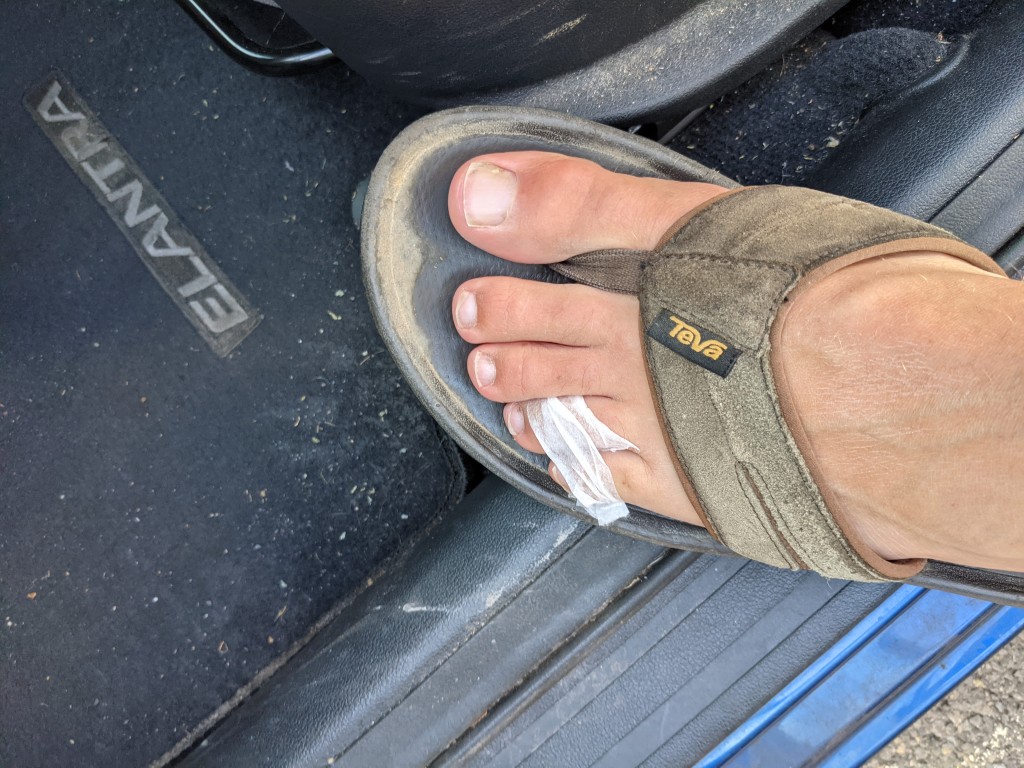
At the time I didn’t know it, but I had just fractured my pinky toe. Through a fog of adrenaline and lug-headed stubbornness that only comes from being a long-distance runner, I managed to run the remaining two miles back to my car. Only once I cooled down did I realize how bad my toes really were.
One trip to the urgent care facility and 8 weeks of recovery later, you can bet your ass I started picking up my feet.
Still though, there’s no getting around it…
At some point in your trail running adventures, you are absolutely, 100%, no doubt, going to unceremoniously eat shit. It happens to everyone. Newbies and seasoned runners alike. In fact, I don’t think you can call yourself a real trail runner until you have stumbled, awkwardly fallen, and bruised both your hip and your ego.
Since you are inevitably going to trip over some rogue root and have a date with the dirt, I do have a few pieces of wisdom I’d like to impart to you:
With any luck, you’ll survive your first few falls with minimal damage. In case you don’t…
I’m not going to tell you that you need to pack a full first-aid kit for every trail run. Frankly, that’s cumbersome and not realistic. On the other hand, it couldn’t hurt to have a couple basics. I recommend bringing a couple band-aids and maybe some gauze packed in something waterproof. It’s not just falls that may bloody you up. Nature is full of unexpected surprises and many of those surprises involve thorns. So many thorns. It’s like the world is a vampire after your blood.
Quick story. Last year I was running a trail I’d been on dozens of times. Some smaller trees had branches dipping down into the path. As I ducked to avoid a branch, I failed to notice that a pricker bush had also invaded the path at a slightly lower height. One of the thorns caught my left ear and snagged. I wasn’t looking for a new ear piercing that day, but nature had other plans.
After coming to a screeching (it was me doing the screeching) halt and dislodging the barb from my cartilage, I now had a minor flesh wound that, given it’s proximity to my head, was bleeding profusely. Stupidly, I did not bring any gauze or band-aids with me, so now I had gore dripping down my ear onto my neck and shirt.
The nearest port-o-john was about a mile away, so I ran there, doubtlessly terrifying any other travelers on the path with the grisly scene festering on the left side of my head. Fun times.
I did make it to the johnny-on-the-spot, which had toilet paper and hand sanitizer. Once I cleaned myself up a bit, the actual damage to my ear was minimal. I could have avoided the whole ordeal if I had simply packed some basics. Of course it could have been much worse, which is why you should…
If you get dehydrated, pull a calf muscle, or collapse on the side of the road, chances are some good samaritan is going to happen along and render assistance. When you’re 10 miles deep on a remote forest trail, the chances of someone stumbling across your exhausted form drop precipitously.
Additionally, many remote trails are not going to have the best cell service. Don’t depend on your phone to be able to make an emergency call if you’re stranded and unable to make it back to your car.
For all those reasons and more, when you go on a trail run, tell someone. Tell them where you’re going and when you expect to be back. It doesn’t have to be a big dramatic thing. When I leave for my Sunday morning long runs, I tell my wife something like, “I’m heading out to Lake Nockamixon and I’ll be back around noon.” If 1PM rolls around and I’m still not back, she can call in the calvary, or at least call me.
I also have my Garmin watch set up to allow my wife to track my runs, so she has a good idea of where I’m at anyway. But like I said, cell service can be spotty, and I wouldn’t rely on it. She’s texted me in the past because my marker didn’t move for 30 minutes due to bad cell service.
Unless you’re planning to run exclusively in the desert, you’re going to get wet and muddy. My second trail run ever was near a lake that had horse trails. The combination of runoff and chewed up turf made for a freakin’ mud pit to rival Woodstock ‘96.
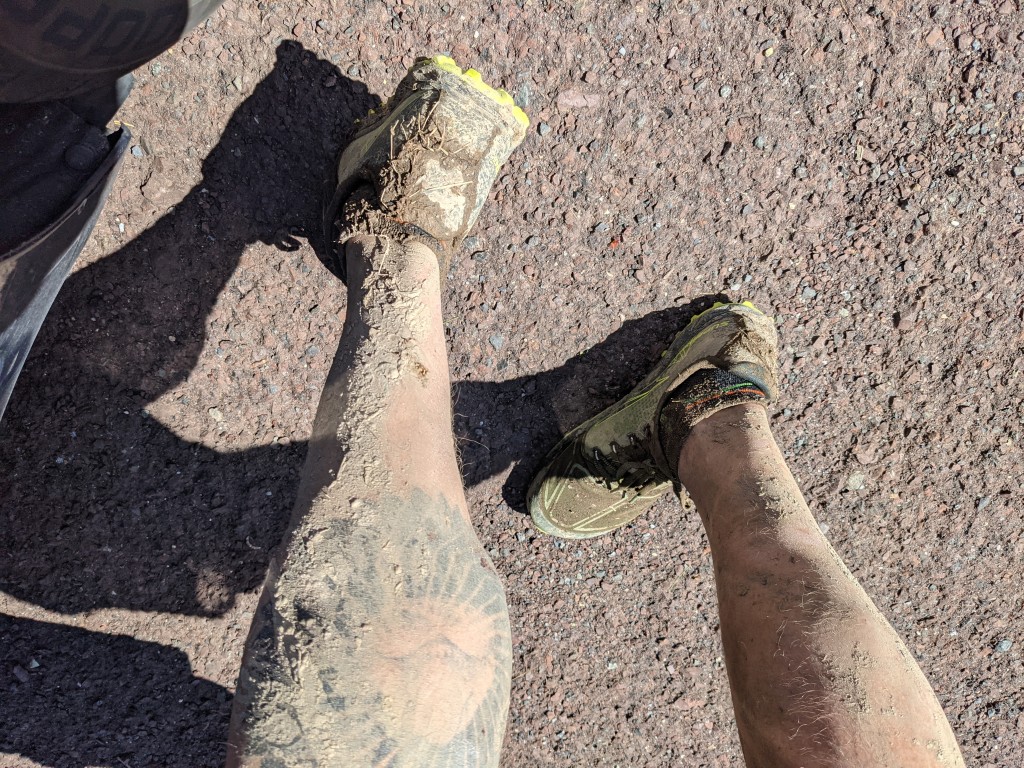
Trails tend to involve a decent amount of mud, puddles, creek crossings, and all manner of dust. When you get back to your car, you’re probably going to be a hot mess. Personally, I always pack a towel and a shirt to change into. I use the towel to clean off the worst of it, and lay it down on the driver’s seat. In the winter, I usually pack a hoodie instead of a shirt to change into.
You may also want to consider wearing gaiters over your shoes. It’s one thing for your shoes and socks to get wet, it’s quite another for them to get filled with mud, rocks, and sand. Gaiters will stop the worst of it from getting in, and you get to look super-stylish in the process.
Here’s a bit of good news sprinkled in with all the doom and gloom. Are you tired of waiting for port-a-potties or searching for a restroom in a crowded urban environment? Well good news friend! The wait it over. When you’re trail running, the world is your bathroom. Although, it doesn’t stock its own toilet paper.
If you’re the kind of person who tends to get runner trots- a delightful euphemism for poop attacks- then you’re going to want to bring some reinforcements with you. I recommend folding up some toilet paper and putting it in a zip-lock bag. That’ll keep it from getting wet from your sweat or weather conditions. That and some hand sanitizer is all you need.
At least you don’t have to buy a soda or ask for the key!
Ok, hear me out. This is not going to be some holier-than-thou lecture on how listening to podcasts or music ruins the running experience and how dare you not be a puritan punishing yourself with a hair shirt and leather flail on each and every stride? Some folks like to get high and mighty about how they never run with headphones and how it blemishes the experience, marring the enjoyment of running.
Those people can fuck 👏 all👏 the👏 way👏 off.
I love music, podcasts, and audiobooks. I love running. Why wouldn’t I want to do them together? When it comes to the trail, I think it is worth considering going without.
First of all, there’s the practical consideration of being safe and aware on the trail. You are going to find yourself on single-track paths with no room to pass. When a runner or biker comes up behind you, they shouldn’t need to holler at the top of their lungs to get your attention. Running trails also requires a high-level of attentiveness to your surroundings and the terrain. Adding music, podcasts, or audiobooks on top of that might be too much, especially when you’re first getting started or trying to navigate especially tricky paths.
Even now, five years in, I will sometimes pause my music when the trail gets too complicated or technical. I need all my attention focused on not injuring myself, and I find any other stimulus too distracting.
The other major component is simply enjoying nature itself. I know this might sound a bit trite, but the trails offer more than just beautiful sights. There’s something to engage all of your senses. The smell of flowers and decomposing leaves. The feeling of the path under your feet and wind on your face. The sound of chirping birds, rushing water, and susurration of insects in the meadow.
I’m not saying you need to leave the headphones at home. I’m just saying you should try starting your run without them and see how it goes. Personally, I tend to do about 1 in 4 of my long runs without headphones in. I still bring them with me, and will pop them in if I need a little motivational boost. Last year, I did a 50k with no headphones and I found it delightful. Your mileage may vary.
There’s already volumes on proper trail etiquette and I’m not going to rehash them here. That’s what the Google machine is for. But I will lay down five essentials.
Hydrate, hydrate, hydrate.
You may have been able to get away with running water bottle free on the road. That is not going to be the case on the trail. There are no random water fountains or convenience stores. Whatever liquid you need, you’ll be carrying with you. For my longer runs (2+ hours) I always fill up my 1.5L water pack. It might seem like overkill, especially in the winter or fall when you aren’t sweating as much. I’m here to tell you that I don’t care what season it is, I’m still bringing lots of water with me.
One of my absolute worst experiences happened because I let myself get severely dehydrated. The original plan was to go out for a 14-ish mile run at a lake near me. I wasn’t super familiar with the trails, but I figured it would be fine. I brought maybe a liter of water with me in my hydration pack.
Well, I ended up getting lost. The day was hotter and more humid than expected, and I was sweating a ton. I finished my water around mile 11 and was getting thirstier by the minute. What was supposed to be a 14 mile run was now up to over 16 miles and I still wasn’t sure how close I was to the trail head. I knew I was really in trouble when I had to stop and walk for the last mile. I simply could not run anymore.
Easing into my car, I felt shaky and my head was cloudy. It was hard to focus properly and assemble my thoughts in a coherent order. All I wanted to do was get home, roughly a 25 minute drive. 15 minutes into the drive, my feet and calves started cramping. I had to pull over the car and stretch before I could drive again.
Once I got home, I dragged myself to the couch and collapsed. I was trembling and cramping all over. My wife gave me two bottles of gatorade and went to the store to buy more. She wanted to take me to the hospital, which probably would have been a wise decision. I insisted I would be okay; all I needed was to rehydrate.
Over the next four hours, I drank 4x 32oz gatorade bottles. My pee was basically brown. I ate bananas and pretzels to get back some potassium and sodium. The cramping stopped after two hours. It was fucking hell. It could have been so much worse.
So yeah. Bring the water. All the water. Drink more than you think you need to. Be consistent and methodical. Because dehydration sucks ass.
As a quick corollary, you’re also going to want some fuel with you as well. You’re not just losing water, you’re also losing electrolytes and burning through calories. If you’re already a long distance runner, you probably use gels or something similar for those long runs. Bring that with you on trails runs too, plus a bit more.
Personally, I stopped using gels a couple years ago and switched to Tailwind. Gels were not sitting well with my tummy, especially after the fourth or fifth packet. Also, if you bring gel packs with you, then you have to bring them back out. Sticky gel packs that get all over your fingers and running vest. With Tailwind, the nutrition is in the water I’m already carrying with me. There’s no sticky residue and no trash to stash somewhere on my person.
That’s what works for me. Find something that works for you and bring extra.
The last thing I want to mention is the need for new gear when you start trail running. This is me giving you permission to spend money. You’re welcome!
At a minimum, you need to buy a pair of running shoes meant for the trails. Shoes that have bigger lugs for traction, better protection for your toes, and something for gaiters to grab onto. My shoe of choice is the Altra Lone Peak. Lots of people swear by Kona, but I just don’t like that level of padding in my shoe. Find the one that works for you.
You’re probably also going to want the following gear:
Trail running is an amazing hobby. It’s truly changed my life for the better, and I hope it does for you as well. My first few runs were memorable and not entirely for good reasons. I wish I had read a post like this before I headed out the door. Well friend, now this post exists for you and I hope it helps.
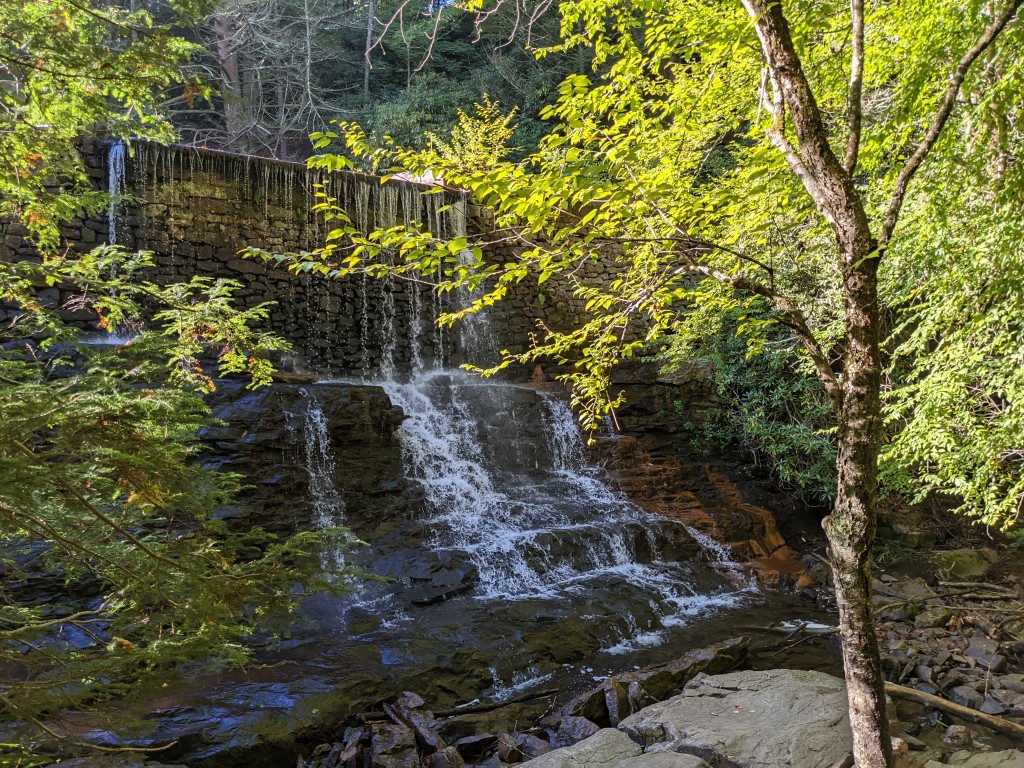
If you see me on the trail, be sure to smile and wave. You know I’ll wave back.
October 5, 2026

August 29, 2026

May 23, 2026

