
Your workloads are probably spread across multiple clouds. That’s nothing new, but what I hadn’t heard before is that 84% of organizations are using two or more cloud providers for critical services. That’s not shocking, but I also didn’t realize the number was that high.
Now you know me, I come from a cloud and infrastructure background. One of the things I quickly realized was the importance of having a single tool that worked across all the different environments I manage. It’s one of the reasons I like Terraform so much. You learn one tool and it works across any cloud or on-prem environment you find yourself responsible for.
I’ve certainly consulted at places that had a different tool for every environment and it was always a mess. One place I remember clearly- though I cannot mention the name- was using Commvault for their VMware environment, NetBackup for Windows bare-metal servers, and Veritas for their Linux workloads. That was three different backup products just for their on-premises stuff. They also had a small presence in AWS, and of course that was being protected using the native AWS tools.
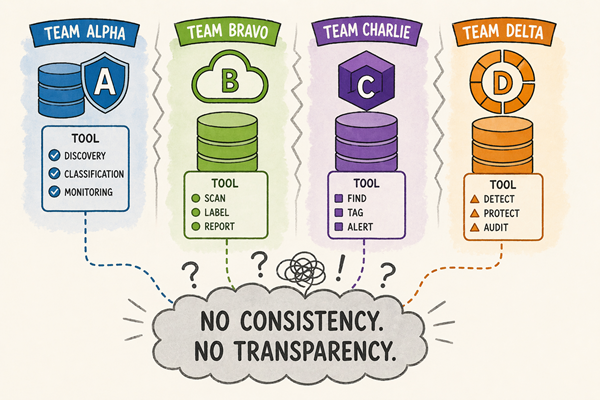
This organization had four different data protection products, supported by four different teams, with zero consistency or transparency. Of course there were some organizational politics going on, and no one wanted to give up their tool of choice, but as an outsider looking in, I could see how inefficient and confusing the whole mess quickly became. Don’t even get me started on their DR runbook!
If I were telling that story today, the mess would be even worse. Back then “the cloud” meant a handful of EC2 instances. Now it’s BigQuery warehouses, S3 data lakes, Cloud Storage buckets full of training data, DynamoDB tables powering production apps, and every one of those is a potential blast radius if something goes wrong. The number of surfaces you need to protect has exploded, and the teams protecting them haven’t.
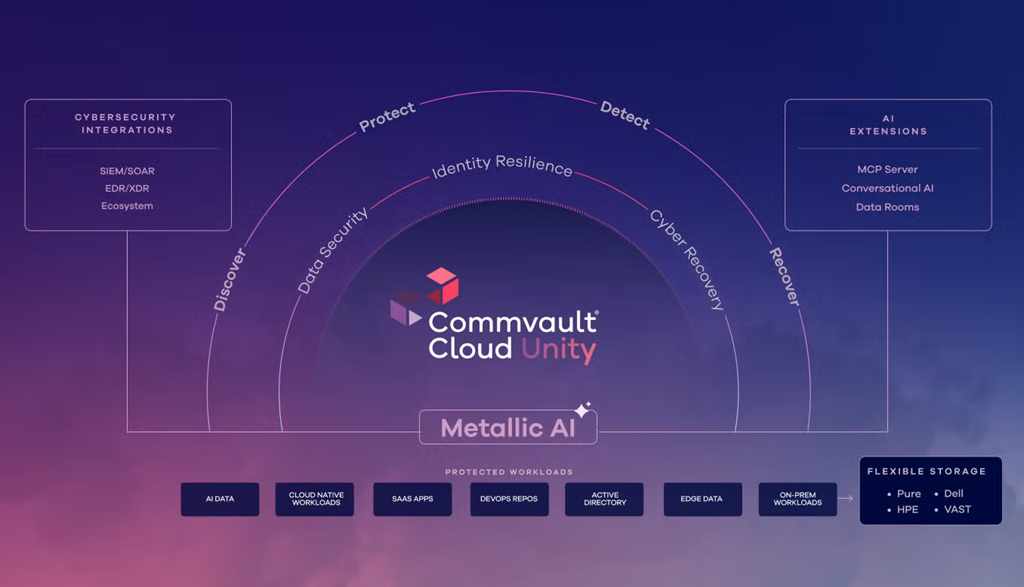
In my ideal world, all of those workloads could be protected by the same solution. And as new platforms arose, that solution could adapt and expand. That’s exactly what something like Commvault Cloud can do today.
For those who don’t know, Commvault Cloud is not your traditional Commvault deployment with media agents and a CommCell server that you host in your datacenter. It is a SaaS solution born in the cloud to support the dynamic nature of modern infrastructure, without you having to deploy a whole bunch of servers and storage to support it. Commvault cloud supports consumption-based billing, automated discovery, and protection across a wide-range of platforms.
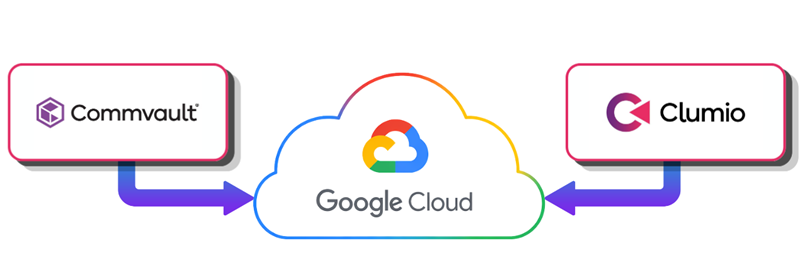
When it first launched, you could spin up an instance of Commvault Cloud from the Azure or AWS marketplaces. Since it was SaaS, you weren’t responsible for managing the infrastructure underneath the solution, but the actual supporting services were running on either Azure or AWS. This week at Google Cloud Next, Commvault has expanded the solution to offer native support in the Google Cloud Marketplace as well. I’m always a fan of more choices, and if you need to ensure that all your data protection solutions reside in a particular cloud, Commvault now has you covered with the big three.
Commvault Cloud also supports protecting a ton of different workloads in Google Cloud: Compute Engine, Cloud SQL, BigQuery, and Spanner. With Clumio now joining the mix, Google Cloud Storage gets the same air-gapped, immutable-vault treatment that AWS customers have been using for S3. Personally, I think the support for BigQuery (and now GCS) is huge, especially with how much time and effort organizations are put into building AI platforms. According to Thomas Kurian, Google Cloud’s CEO, 60% of AI startups are using Google Cloud, and I’d bet most of them are housing training data in Cloud Storage and querying it from BigQuery. Losing either one would ruin their week, if not their quarter.
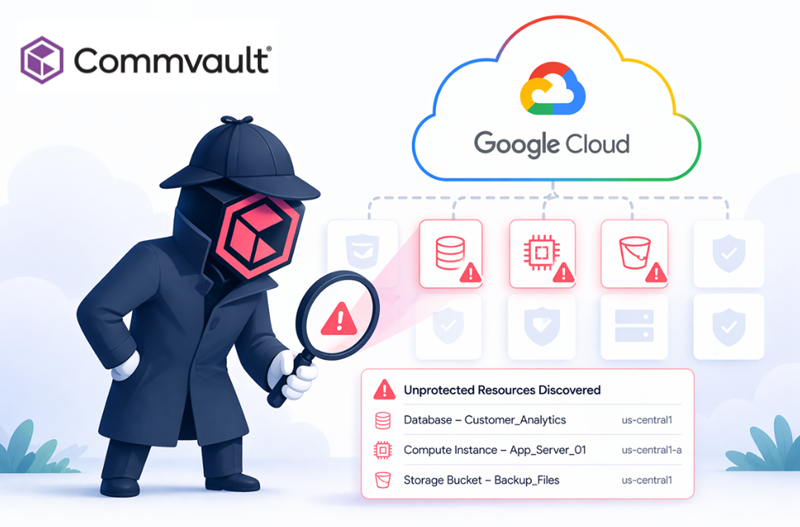
One feature of the solution I especially want to highlight is automatic discovery of unprotected resources. Back in the dark days when I was a VMware admin, automatic discovery of unprotected VMs was a godsend. The place I was working at allowed a lot of people to create virtual machines, and not all of them knew to put in a ticket to request data protection. After a couple of VMs got deleted by accident with no protection in place, we set up automatic data protection to prevent it from happening again.
My VMware environment was not that dynamic, so having automatic discovery was nice but not necessary. If you think about how fluid cloud environments are, automatic discovery and protection becomes an absolute essential. Commvault lets you tweak and customize the discovery to suit your needs, exempting some accounts, workloads, and services. I can’t imagine trying to manually protect assets in the cloud across the dizzying number of services available, and now I don’t have to.
Commvault Cloud has also branched out into supporting SaaS applications, which is not something I immediately think of when considering data protection. Usually I’m focused on protecting internally hosted applications and infrastructure, but given how prevalent the use of SaaS is- I mean Commvault Cloud is SaaS- it’s not surprising that Commvault sees that as a massive area of growth. If you’re using Google Workspace for your office applications, Commvault Cloud supports protecting that data as well.
When the cloud started becoming a real thing over a decade ago, I desperately wanted a single tool I could use for data protection. At the time, the landscape was an absolute hodge-podge of solutions with overlapping capabilities that never quite covered everything. Even if my unnamed and slightly shamed organization wanted to replace their four solutions, they simply could not have, at the time. Now it seems like Commvault Cloud, together with Clumio, could give them a single solution to cover all their data protection needs now and into the future (across AWS, Azure, and now Google Cloud), and grant a little consistency to their chaotic world.
If this has piqued your interest, check out this stuff from Commvault to learn more.
If you’re at Google Cloud Next this week, they’re at Booth #3617 running demos, including the new Clumio-for-GCS stuff in early access.
Thanks for reading and thanks to Commvault for sponsoring this post!
Open Source Malware, NPM, and the Risk of Helpful AI
April 14, 2026

The State of Platform Engineering and DevEx
April 13, 2026

February 4, 2026

